
ISO certification is more than obtaining a certificate—it is about establishing an effective management system that drives continual improvement, enhances customer confidence, ensures regulatory compliance, and improves operational performance. Whether your organization is pursuing ISO 9001, ISO 14001, ISO 45001, ISO 27001, or another ISO standard, proper planning and implementation are essential for long-term success.
This guide explains the key steps organizations should follow to achieve ISO certification successfully while building a culture of quality, compliance, and continual improvement.
Why ISO Certification Matters
Achieving ISO certification demonstrates your organization’s commitment to internationally recognized best practices. Certification helps businesses improve efficiency, reduce operational risks, increase customer satisfaction, and gain a competitive advantage in local and international markets.
Some of the key benefits include:
- Improved operational efficiency
- Stronger customer confidence
- Better regulatory compliance
- Reduced business risks
- Improved process consistency
- Increased business opportunities
- Enhanced organizational reputation
- Culture of continual improvement
Step 1: Conduct a Gap Analysis
The first step toward ISO certification is performing a comprehensive gap analysis. This assessment compares your existing management system against the requirements of the applicable ISO standard.
A gap analysis helps organizations:
- Identify areas requiring improvement
- Understand compliance gaps
- Prioritize implementation activities
- Develop a practical implementation roadmap
- Estimate resources and timelines
Starting with a gap analysis minimizes surprises during the certification audit.
Step 2: Develop Your ISO Documentation
Documentation forms the foundation of every successful management system. Proper documentation ensures consistency, traceability, and compliance with ISO requirements.
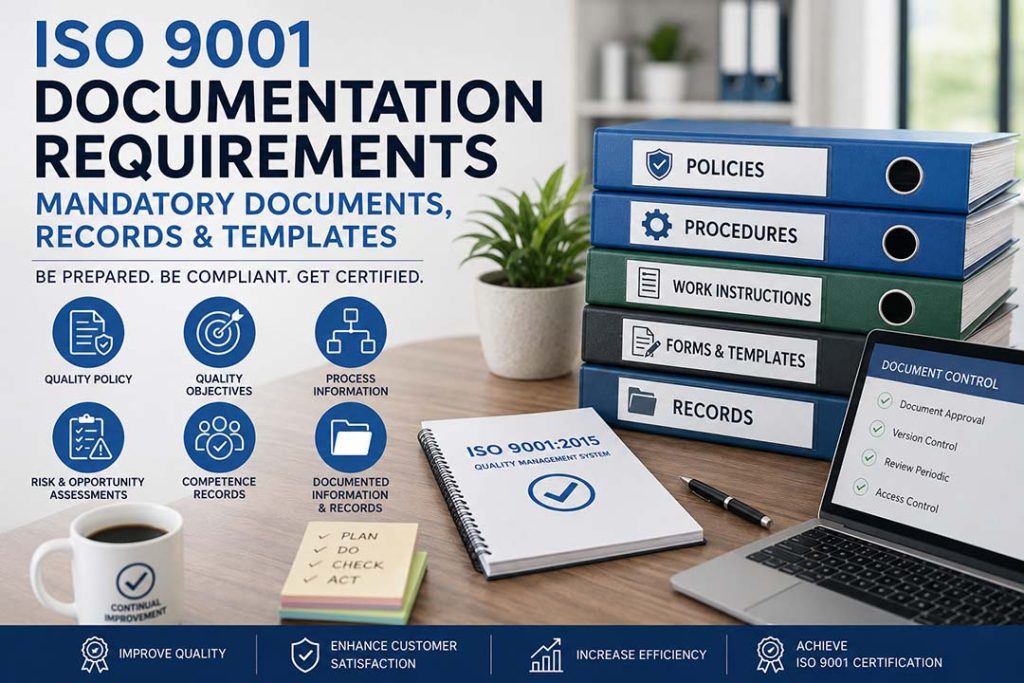
Typical documentation includes:
- Policies
- Procedures
- Work Instructions
- Process Maps
- Risk Registers
- Objectives and KPIs
- Forms and Records
Well-structured documentation enables employees to perform their responsibilities consistently while providing objective evidence during certification audits.
Step 3: Train and Engage Employees
Successful ISO certification depends on employee awareness and participation. Every employee should understand how their work contributes to the effectiveness of the management system.
Training should include:
- ISO awareness
- Organizational policies
- Roles and responsibilities
- Risk-based thinking
- Process compliance
- Continual improvement
An informed workforce helps reduce nonconformities and supports sustainable implementation.
Step 4: Conduct Internal Audits
Internal audits verify whether the management system is operating effectively and complying with ISO requirements.
An effective internal audit program helps organizations:
- Identify weaknesses
- Verify process effectiveness
- Detect nonconformities
- Confirm implementation of corrective actions
- Prepare for certification audits
Regular audits also encourage continual improvement throughout the organization.
Step 5: Perform Management Review
Management review meetings ensure top management evaluates the performance of the management system before the certification audit.
Management reviews typically assess:
- Audit results
- Performance objectives
- Customer feedback
- Risks and opportunities
- Resource requirements
- Improvement initiatives
Leadership involvement is essential for maintaining an effective management system.
Step 6: Work with Experienced ISO Consultants
Many organizations choose experienced consultants to simplify the ISO certification process.
Professional consultants can assist with:
- Gap analysis
- Documentation development
- Risk assessments
- Employee training
- Internal audits
- Audit preparation
- Corrective action support
Working with knowledgeable consultants often reduces implementation time and improves the likelihood of achieving certification during the initial audit.
Preparing for the Certification Audit
Before inviting a certification body, organizations should ensure:
- Documentation is complete.
- Employees have received appropriate training.
- Internal audits have been completed.
- Nonconformities have been closed.
- Management reviews have been conducted.
- Records are available as objective evidence.
Being well prepared significantly increases the chances of a successful certification audit.
Conclusion
ISO certification is an investment in your organization’s future. A structured implementation approach that includes gap analysis, effective documentation, employee engagement, internal audits, and management commitment creates a strong foundation for certification success.
Organizations that prepare thoroughly not only achieve certification more efficiently but also realize lasting improvements in quality, environmental performance, information security, occupational health and safety, and overall business excellence.
If your organization is planning to achieve ISO certification, partnering with experienced consultants can help streamline the implementation process and ensure your management system meets international best practices.
For Standard Copies you can search them on ISO.org


[…] Preparing Your Organization for Successful ISO Certification […]
[…] ISO 9001 – Quality Management System […]
[…] guide explains the mandatory documentation requirements, recommended documents, and practical records that help […]
Comments are closed.