ISO 14001:2026 Changes: What Businesses Need to Know
ISO 14001:2026 Changes are expected to strengthen how organizations identify, manage, and continually improve their environmental performance. While ISO 14001:2015 remains the current certifiable version, the upcoming revision is anticipated to place greater emphasis on climate change, strategic environmental planning, risk management, measurable performance, and sustainability.
Environmental Management Systems (EMS) have evolved beyond regulatory compliance. Today, organizations are expected to demonstrate environmental responsibility, improve operational efficiency, reduce their environmental footprint, and support broader Environmental, Social, and Governance (ESG) objectives.
This article introduces the anticipated ISO 14001:2026 Changes, explains why the standard is being revised, and outlines practical steps organizations can begin implementing to prepare for the transition.
Why Are the ISO 14001:2026 Changes Important?
The business environment has changed significantly since the release of ISO 14001:2015. Organizations now face increasing expectations from regulators, customers, investors, and other interested parties regarding environmental performance and sustainability.
The anticipated ISO 14001:2026 Changes aim to ensure that Environmental Management Systems remain effective in addressing today’s environmental challenges while aligning with global sustainability initiatives.
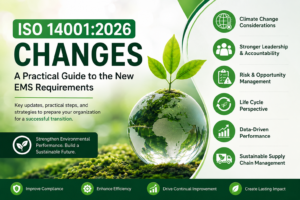
The revision is expected to focus on:
- Greater consideration of climate change.
- Improved environmental risk and opportunity management.
- Stronger leadership accountability.
- Enhanced life cycle thinking.
- Better integration with organizational strategy.
- Data-driven environmental performance evaluation.
- Increased focus on continual improvement.
These enhancements will help organizations build more resilient and effective Environmental Management Systems.
Key Areas Expected in the ISO 14001:2026 Changes
Although the final published version may include editorial refinements, industry discussions indicate several important areas of improvement.
Organizations should expect increased emphasis on:
- Climate change adaptation and mitigation.
- Strategic environmental planning.
- Environmental risks and opportunities.
- Leadership involvement.
- Life cycle perspective.
- Sustainable resource management.
- Environmental objectives supported by measurable Key Performance Indicators (KPIs).
- Supply chain environmental performance.
- Digital monitoring and environmental data management.
These anticipated ISO 14001:2026 Changes are intended to improve environmental performance rather than simply increasing documentation.
Practical Ways to Prepare for the ISO 14001:2026 Changes
Organizations do not need to wait until the revised standard is officially published. Early preparation can significantly reduce transition time and implementation costs.
Consider the following practical actions:
1. Review Your Environmental Context
Evaluate internal and external environmental issues that may affect your Environmental Management System.
Consider:
- Climate-related risks.
- Resource availability.
- Environmental regulations.
- Market expectations.
- Sustainability commitments.
2. Strengthen Leadership Involvement
Senior management should actively participate in environmental planning by:
- Reviewing environmental objectives.
- Providing necessary resources.
- Monitoring EMS performance.
- Promoting environmental awareness throughout the organization.
Leadership commitment remains one of the strongest drivers of successful implementation.
3. Update Environmental Risk Assessments
Expand your environmental risk assessment process to include:
- Climate risks.
- Extreme weather events.
- Water scarcity.
- Energy efficiency.
- Waste reduction opportunities.
- Biodiversity considerations.
A proactive approach enables organizations to respond more effectively to emerging environmental challenges.
4. Improve Environmental Performance Monitoring
Develop meaningful Environmental KPIs, such as:
- Energy consumption.
- Water usage.
- Carbon emissions.
- Waste generation.
- Recycling rates.
- Environmental incidents.
Reliable data supports informed decision-making and demonstrates continual improvement.
5. Review Your Supply Chain
Environmental impacts often extend beyond your organization’s operations.
Evaluate suppliers based on:
- Environmental compliance.
- Waste management practices.
- Sustainable sourcing.
- Regulatory compliance.
- Environmental certifications.
Engaging suppliers strengthens overall environmental performance.
6. Train Employees
Environmental objectives cannot be achieved without employee awareness.
Provide regular training on:
- Environmental responsibilities.
- Operational controls.
- Emergency preparedness.
- Waste segregation.
- Energy conservation.
- Pollution prevention.
A knowledgeable workforce contributes directly to improved environmental outcomes.
Benefits of Preparing Early
Organizations that begin preparing for the ISO 14001:2026 Changes before publication are likely to experience several advantages.
These include:
- Smoother transition to the revised standard.
- Reduced implementation costs.
- Improved regulatory compliance.
- Better operational efficiency.
- Stronger environmental performance.
- Increased customer confidence.
- Enhanced corporate reputation.
- Better alignment with ESG initiatives.
Early preparation also minimizes disruption during future certification or surveillance audits.
Who Will Be Affected?
The ISO 14001:2026 Changes will be relevant to organizations across a wide range of industries, including:
- Manufacturing
- Construction
- Oil and Gas
- Engineering
- Healthcare
- Food Processing
- Logistics
- Chemical Industries
- Laboratories
- Facility Management
- Government Organizations
- Service Providers
Any organization certified to ISO 14001:2015 should begin reviewing its Environmental Management System in preparation for the eventual transition period.
Conclusion
The anticipated ISO 14001:2026 Changes represent an important step in the evolution of Environmental Management Systems. The revised standard is expected to strengthen environmental performance, improve resilience to climate-related risks, enhance leadership accountability, and encourage organizations to adopt a more strategic and data-driven approach to environmental management.
Rather than waiting for the official publication, organizations should begin reviewing their existing Environmental Management Systems, updating environmental risk assessments, strengthening leadership involvement, and improving performance monitoring. Early preparation will make the transition more efficient while delivering long-term environmental and business benefits.
This article is the first in our ISO 14001:2026 Changes series. In the next article, we will explore the expected climate change requirements in detail, including practical implementation guidance and examples to help your organization prepare.
If you are planning to transition to the revised Environmental Management System, explore our ISO 14001 Consultancy Services or Book a Free Consultation with our experts.
References
- International Organization for Standardization (ISO) – ISO 14001 Environmental Management Systems.
- ISO Technical Committee (ISO/TC 207) – Environmental Management.
- United Nations Sustainable Development Goals (SDGs).
- Intergovernmental Panel on Climate Change (IPCC) climate guidance.